Concrete Sidewalks / Walkways
A well-built concrete sidewalk or walkway creates a safe, durable, and attractive path through your property. Whether you need a new walkway leading to your front door, a sidewalk connecting a driveway to a garage, a path around a commercial building, or replacement of older damaged concrete, the finished surface should be designed around how people will actually use the space.
At Cookeville Concrete Pros, we provide professional concrete sidewalk and walkway services in Cookeville, TN for homeowners, businesses, property owners, and other customers throughout Cookeville and surrounding Putnam County communities. Cookeville city requirements for driveways and walkways can be found here.
Concrete walkways can serve both practical and visual purposes. They create defined pedestrian routes, improve access between different areas of a property, reduce the need to walk through grass or mud, and can help give residential and commercial properties a more finished appearance.
From simple straight sidewalks to curved residential walkways and larger commercial pedestrian areas, each project begins with understanding the property, the intended route, and how the new concrete should connect with the surrounding surfaces.
Concrete Sidewalk Installation in Cookeville, TN
Installing a concrete sidewalk involves more than forming a narrow strip and pouring concrete. The layout, grade, surrounding terrain, drainage, connection points, intended use, and condition of the underlying ground all affect the finished project.
Depending on the property, sidewalk and walkway installation may involve:
- Establishing the route of the walkway
- Excavating the installation area
- Removing vegetation, soil, or existing concrete
- Grading the path
- Preparing and compacting the base
- Setting forms
- Establishing the finished elevation
- Considering drainage and water runoff
- Installing reinforcement when appropriate
- Placing the concrete
- screening and finishing the surface
- Creating control joints
- Finishing edges
- Allowing adequate curing time
Proper planning helps create a walkway that fits naturally into the property instead of appearing as though it was added without consideration for the surrounding area.
Residential Concrete Walkways
Concrete walkways are used throughout residential properties for many different purposes.
A new walkway can connect:
- A driveway to the front entrance
- A driveway to a side entrance
- A home to a detached garage
- A home to a backyard patio
- A house to a workshop
- A garage to another building
- A parking area to a home
- A backyard to a storage building
- Outdoor living areas
- Multiple sections of a larger property
For many homeowners, the walkway becomes one of the most frequently used concrete surfaces on the property. It may be the path guests use to reach the front door, the route your family takes between the driveway and house, or the connection between a new patio and another outdoor feature.
That makes both function and appearance important considerations.
Front Entrance Walkways
The walkway leading to your front entrance is often one of the first things visitors see when approaching your home. A clean concrete entrance walkway can create a defined route from the driveway or parking area to the front door while helping the entrance look more organized and intentional.
Front walkways can be designed as:
- Straight concrete paths
- Gently curved walkways
- Wider entrance walks
- Walkways with decorative borders
- Stamped concrete entrances
- Paths connecting to front porches
- Walkways connected to driveways
- Paths incorporated into landscaping
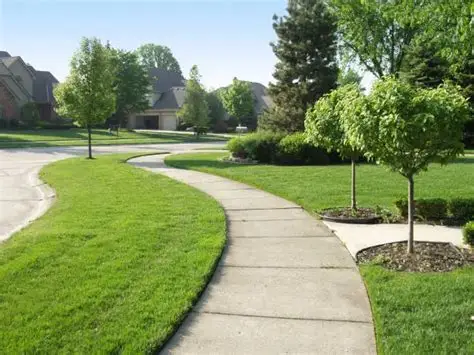
The best layout depends on the location of the home, driveway, landscaping, porch, and surrounding terrain. A walkway does not necessarily need to follow the shortest possible route. A carefully planned curve can sometimes complement landscaping and the shape of the property while still providing convenient access.
Concrete Walkways Around the Home
Concrete paths can also improve access around the sides and rear of a home.
Side-yard and backyard walkways are commonly used to connect areas such as:
- Driveways
- Rear entrances
- Patios
- Outdoor kitchens
- Garages
- Workshops
- Sheds
- Pool areas
- Storage buildings
- Utility areas
These walkways may be less visible from the road, but they can significantly improve the everyday usability of a property. Instead of repeatedly walking over grass, dirt, gravel, or muddy areas, a concrete path creates a permanent surface for foot traffic.
Concrete Sidewalk Replacement
Older sidewalks and walkways can eventually deteriorate.
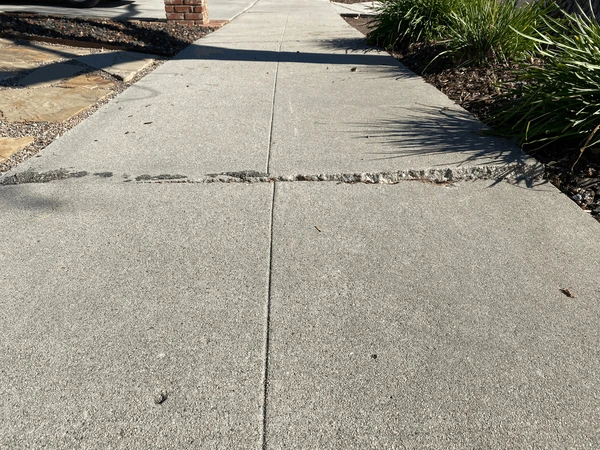
Depending on age, site conditions, drainage, ground movement, tree roots, previous installation practices, and other factors, existing concrete may develop:
- Cracks
- Broken corners
- Surface deterioration
- Uneven sections
- Settlement
- Spalling
- Discoloration
- Drainage problems
- Multiple previous repairs
When deterioration becomes extensive, replacing the affected concrete may provide a better long-term solution than continuing to patch individual areas. A concrete sidewalk replacement in Cookeville may include removing the old concrete, evaluating the underlying area, preparing the base, establishing the appropriate elevation, and installing new concrete.
Replacement also gives the property owner an opportunity to modify the original design.
You may decide to:
- Widen the walkway
- Change its route
- Improve connections to the driveway
- Add access to a patio
- Modify the curve
- Improve drainage
- Add decorative concrete
- Connect additional structures
- Replace multiple damaged sections at once
Cracked and Uneven Concrete Walkways
Cracking does not automatically mean an entire walkway needs to be replaced. The extent and cause of the damage should be considered. A small, isolated crack is different from a walkway containing numerous broken, settled, or deteriorated sections.
When evaluating older concrete, some of the questions to consider include:
- Is the damage localized or widespread?
- Has a section settled?
- Is water collecting around the walkway?
- Are tree roots affecting the concrete?
- Are multiple slabs uneven?
- Is the surface deteriorating?
- Has the walkway already been repaired several times?
- Would replacing one section create an acceptable transition to the existing concrete?
The appropriate solution depends on the actual condition of the walkway.
Concrete Sidewalks for Driveways and Parking Areas
One of the most common uses for a residential or commercial sidewalk is connecting a parking area to a building entrance. A sidewalk can provide a dedicated pedestrian route between:
Driveway → Home
Parking Area → Business Entrance
Garage → House
Parking Pad → Walkway
Driveway → Backyard
This can be especially useful on properties where people would otherwise have to walk across grass, landscaping, gravel, or vehicle travel areas. When new driveway and sidewalk work are being completed together, planning both surfaces at the same time can also help create cleaner transitions between them.
Sidewalks for Garages, Shops, and Outbuildings
Many properties throughout Cookeville and the surrounding Upper Cumberland include detached structures.
These may include:
- Garages
- Workshops
- Metal buildings
- Storage buildings
- Sheds
- Pole barns
- Equipment buildings
A concrete walkway can provide a permanent pedestrian connection between the main home or driveway and these structures. If you are already planning a new garage slab or shop pad, the walkway can often be considered as part of the overall concrete project. That allows the slab, driveway approach, and pedestrian path to be coordinated rather than designed independently.
Concrete Walkways for Patios and Outdoor Living Areas
Concrete sidewalks can also connect directly with patios and outdoor living spaces.
For example, a walkway might run from:
- A driveway to a backyard patio
- A patio to a fire-pit area
- A home to an outdoor kitchen
- A patio to a detached garage
- A rear entrance to another outdoor feature
Using concrete for both the patio and connecting walkway can create a consistent hardscape appearance throughout the property. Decorative finishes may also be considered when the walkway is part of a larger outdoor living project.
Curved Concrete Walkways
Not every concrete path has to be perfectly straight.
Curved walkways can be useful when navigating:
- Landscaping beds
- Trees
- Existing structures
- Sloped areas
- Patios
- Driveway layouts
- Yard features
A gentle curve can also create a softer appearance around residential landscaping compared with a completely straight path. However, the design should remain functional. The walkway still needs to provide a practical route and accommodate how people will move through the property.
Stamped and Decorative Concrete Walkways
Homeowners looking for something beyond traditional gray concrete may consider stamped or decorative concrete walkways.
Decorative treatments can create additional visual interest around:
- Front entrances
- Patios
- Garden paths
- Outdoor living areas
- Porches
- Courtyards
- Landscaped spaces
Depending on the project, decorative options may include different patterns, textures, borders, and selected color treatments. If decorative concrete is desired, those decisions should be made before the walkway is poured because the finishing process is part of the installation itself.
Traditional Broom-Finished Concrete Sidewalks
For many applications, traditional broom-finished concrete remains a practical option. A broom finish creates a lightly textured surface rather than leaving the concrete completely smooth.
It is commonly used for outdoor concrete surfaces such as:
- Sidewalks
- Driveways
- Walkways
- Exterior slabs
- Commercial pedestrian areas
The finished appearance is simple, clean, and well suited to many residential and commercial properties.
Concrete Sidewalk Edges and Finishing
Clean edges can make a significant difference in the appearance of a finished sidewalk. During concrete finishing, edges and joints are worked to create defined transitions between individual sections and surrounding areas.
The overall finished appearance depends on details such as:
- Consistent width
- Straight or smooth curved edges
- Uniform surface finish
- Joint placement
- Clean transitions
- Proper elevations
Good finishing should complement the preparation that occurred beneath the concrete.
Concrete Control Joints
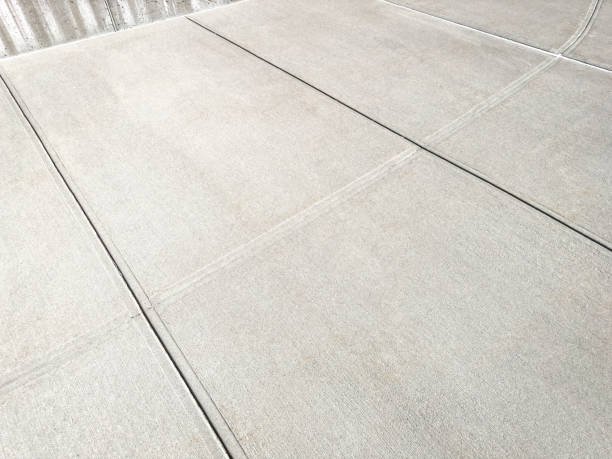
Concrete naturally experiences shrinkage as it cures. Control joints are intentionally created in sidewalks and walkways to help influence where shrinkage-related cracking is more likely to occur. They also create the familiar segmented appearance found on many concrete sidewalks. The spacing and layout depend on the dimensions and geometry of the installation.
Concrete can still develop cracks over time, and no responsible concrete contractor can guarantee that exterior concrete will remain completely crack-free forever. Proper preparation, placement, jointing, and curing are used to help manage normal concrete behavior.
Walkway Width and Layout
The appropriate width of a walkway depends on how it will be used and whether any applicable codes or design requirements apply.
A small private garden path may serve a very different purpose from:
- A primary residential entrance
- A commercial sidewalk
- An accessible route
- A public sidewalk
- A walkway serving frequent pedestrian traffic
For private residential projects, the layout can often be designed around the needs of the homeowner and property. Commercial and public-facing projects may have additional accessibility, planning, or municipal requirements. These requirements should be identified before construction begins.
Concrete Walkways and Drainage
Water movement is an important consideration when installing exterior concrete. A walkway should fit with the drainage conditions of the surrounding property.
The final grade may need to account for:
- Water moving away from buildings
- Existing yard drainage
- Downspouts
- Landscaping
- Driveway runoff
- Nearby patios
- Sloped terrain
- Public drainage systems
The goal is to create a functional pedestrian surface without unnecessarily introducing drainage problems elsewhere on the property.
Connecting New Concrete to Existing Concrete
Many walkway projects involve connecting new concrete to an existing surface.
The new walkway may meet:
- An existing driveway
- Front porch
- Garage slab
- Patio
- Sidewalk
- Building entrance
These transitions should be considered during planning so that the finished elevations work together. The condition of the existing concrete should also be evaluated, particularly if the older surface has settlement or significant deterioration.
Concrete Sidewalks for Commercial Properties
Cookeville Concrete Pros also provides commercial concrete sidewalk services in Cookeville, TN.
Commercial sidewalks may be needed around:
- Office buildings
- Retail properties
- Restaurants
- Warehouses
- Service businesses
- Medical offices
- Apartment properties
- Industrial sites
- Commercial developments
Concrete pedestrian areas may connect parking lots, building entrances, loading areas, multiple structures, or other portions of a commercial site. Commercial projects can involve requirements that differ from private residential walkways, including accessibility, engineering, site-plan, inspection, or public-right-of-way considerations.
These requirements should be identified before the work begins.
Public Sidewalks and Right-of-Way Considerations
A walkway entirely on private residential property is different from concrete work located within or affecting a public street or right-of-way. The City of Cookeville publishes specific sidewalk requirements and states that the Public Works Department is responsible for inspecting sidewalks during construction.
Additionally, the City of Cookeville requires a permit before excavation takes place in or underneath a street, alley, right-of-way, or public property. That means a project involving municipal property should not simply be treated like a private backyard walkway. Property owners and contractors should verify the applicable requirements with the City of Cookeville before work begins.
Residential vs. Public Sidewalk Projects
It is useful to distinguish between these two project types.
Private Residential Walkway
Examples include:
- Driveway to front porch
- House to patio
- Garage to home
- Backyard walkway
- Shop access
- Garden path
These are generally located completely on private property.
Public or Right-of-Way Sidewalk
Examples may include:
- Sidewalk along a city street
- Sidewalk crossing a public frontage
- Replacement within public right-of-way
- Sidewalk associated with a development
- Commercial frontage improvements
These projects may be subject to City of Cookeville standards, inspections, and permitting requirements.
Accessibility Considerations
Commercial, public, multifamily, and certain other pedestrian routes may be subject to accessibility requirements.
Factors can include:
- Width
- Running slope
- Cross slope
- Surface condition
- Changes in level
- Curb ramps
- Landings
- Accessible routes
Applicable requirements depend on the project. If a sidewalk is being constructed as part of a commercial development, public improvement, or required accessible route, the plans and applicable standards should be reviewed before concrete is placed.
How Much Does a Concrete Sidewalk Cost in Cookeville?
The cost of a concrete sidewalk or walkway in Cookeville, TN depends on the specific project rather than a single universal price.
Factors that may affect pricing include:
- Total square footage
- Walkway width
- Length
- Concrete thickness
- Site accessibility
- Excavation requirements
- Existing concrete removal
- Grading
- Base preparation
- Reinforcement
- Curved versus straight layout
- Decorative finishes
- Stamped concrete
- Drainage considerations
- Connection points
- Site conditions
For example, installing a straightforward private walkway on an easily accessible site is different from replacing a public sidewalk that requires demolition, right-of-way coordination, and compliance with municipal specifications.
An estimate should therefore be based on the actual property and scope of work.
What Should I Provide When Requesting an Estimate?
If you are planning a new sidewalk or walkway, providing basic project information can make the initial conversation more productive.
Helpful information includes:
Project location
Tell us where the property is located.
Approximate length and width
Basic measurements help establish project size.
Type of walkway
Explain whether it is a front entrance, backyard path, commercial sidewalk, garage connection, or another application.
Existing surface
Let us know whether the area is currently grass, dirt, gravel, or existing concrete.
Concrete removal
Identify whether old sidewalk sections need to be removed.
Connection points
Tell us what the walkway will connect—for example, a driveway to a porch.
Desired finish
Mention whether you prefer standard concrete or are interested in stamped or decorative options.
Photos
Pictures can provide helpful context regarding the existing site.
Concrete Sidewalk Repair vs. Replacement
Not every damaged sidewalk requires complete replacement.
The appropriate solution depends on:
- Severity of cracking
- Settlement
- Surface deterioration
- Age
- Number of affected sections
- Underlying conditions
- Intended use
Localized damage may potentially be addressed differently from widespread deterioration. When multiple sections are damaged or elevations have changed substantially, replacement may provide an opportunity to correct the underlying area and install a new surface.
Sidewalk Replacement and Tree Roots
Tree roots can sometimes affect older concrete sidewalks. As roots grow beneath the concrete, individual sections can lift or shift. The correct response depends on the particular tree, root system, location, and sidewalk conditions. Simply replacing concrete without understanding the source of the movement may not address the underlying issue. Trees located within public rights-of-way may also be subject to municipal requirements, so those situations should be evaluated before work begins.
Concrete Walkways for New Construction
New homes and commercial properties often require several pedestrian connections.
Planning the walkways during the overall site-development process can help coordinate them with:
- Driveways
- Parking areas
- Porches
- Garage slabs
- Patios
- Landscaping
- Drainage
- Building entrances
Instead of treating each concrete feature as a separate afterthought, the driveway, walkway, and other hardscape areas can be considered as part of the larger site layout.
Concrete Walkways for Existing Properties
You do not have to be building a new home to add a concrete walkway.
Existing properties may benefit from new paths when homeowners:
- Add a detached garage
- Build a patio
- Add a shop
- Create additional parking
- Install a backyard structure
- Modify landscaping
- Replace an older walkway
- Improve access between areas
A new concrete walkway can provide a straightforward way to make an existing property easier to navigate.
Why Choose Concrete for a Walkway?
Concrete is commonly used for sidewalks because it creates a defined, permanent exterior walking surface.
It can also coordinate with other concrete areas around the property, including:
- Driveways
- Patios
- Garage slabs
- Steps
- Parking pads
- Commercial concrete areas
This allows homeowners and property owners to create a consistent hardscape material throughout multiple parts of the property.
Serving Cookeville and Putnam County
Cookeville Concrete Pros provides concrete sidewalk and walkway services throughout Cookeville, Tennessee and surrounding Putnam County communities.
Our service area includes:
Cookeville • Algood • Baxter • Monterey • Putnam County • and surrounding Upper Cumberland areas
If you are located near Cookeville but outside one of these communities, contact us to discuss your project location.
Frequently Asked Questions About Concrete Sidewalks & Walkways
Can you replace individual sidewalk sections?
Depending on the condition and layout of the existing walkway, individual sections may sometimes be removed and replaced. The surrounding concrete and underlying conditions should be evaluated before determining the appropriate scope.
Can my concrete walkway be curved?
Yes. Residential walkways can be designed with curves when appropriate for the property, landscaping, and desired appearance.
Can a walkway connect directly to my driveway?
Yes. Concrete walkways commonly connect driveways with front entrances, garages, patios, and other areas.
Can you install a sidewalk to my detached garage or shop?
Yes. Concrete walkways can provide pedestrian access between homes, driveways, garages, workshops, sheds, and other structures.
Can I use stamped concrete for a walkway?
Stamped and decorative concrete can be used for certain walkway projects. Decorative options should be selected before concrete placement so they can be incorporated into the finishing process.
Why are there lines across concrete sidewalks?
Many of the lines visible in sidewalks are intentionally created control joints. They are used to help manage shrinkage-related cracking as the concrete cures and changes over time.
Will new concrete perfectly match my existing sidewalk?
Concrete appearance can vary based on age, mixture, finishing, weather exposure, curing, and other factors. New concrete should not automatically be expected to perfectly match older weathered concrete.
Do Cookeville sidewalks have specific construction requirements?
The City of Cookeville publishes specific sidewalk requirements for applicable projects and states that Public Works is responsible for inspecting sidewalks during construction. Private residential walkways completely within private property may involve different requirements from public or right-of-way sidewalks.
Do I need a permit for a sidewalk in the public right-of-way?
Projects involving excavation in a City of Cookeville street, alley, right-of-way, or other public property require coordination with the city and may require an excavation permit. Requirements should be verified with Cookeville Public Works before work begins.
Contact Cookeville Concrete Pros today to request an estimate for concrete sidewalks and walkways in Cookeville, TN.