Concrete Repair and Replacement
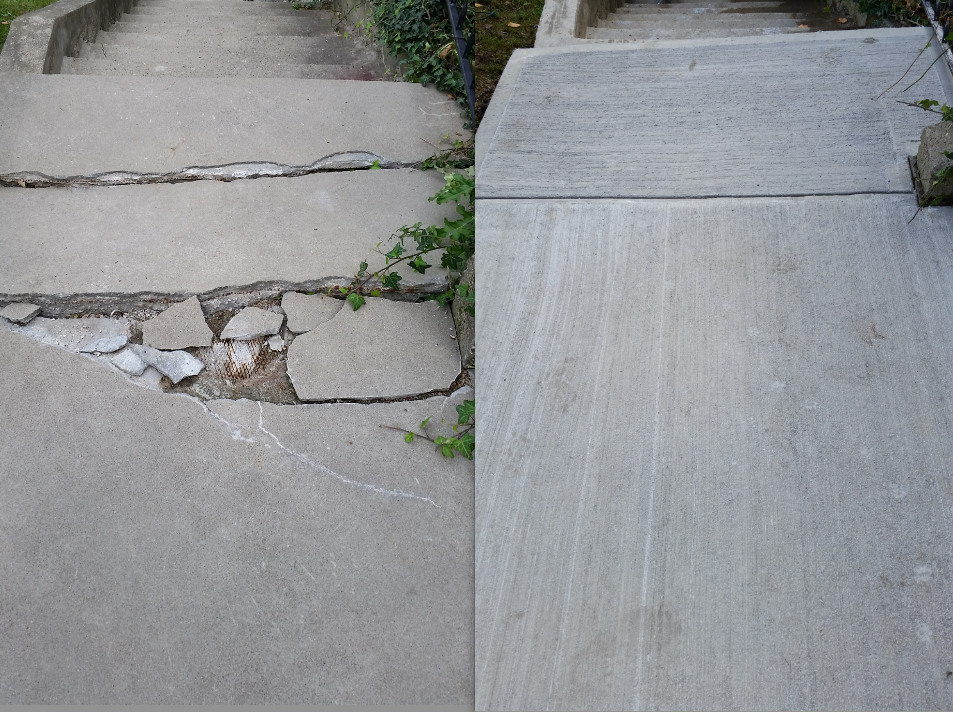
Cracked, broken, uneven, or deteriorating concrete can affect both the appearance and usefulness of your property. Some concrete problems may be appropriate for repair, while more extensive damage can make removal and replacement the better long-term solution.
At Cookeville Concrete Pros, we provide professional concrete repair and replacement services in Cookeville, TN for residential and commercial properties throughout Cookeville and surrounding Putnam County communities.
Whether you are dealing with a damaged driveway, deteriorating patio, broken sidewalk, aging concrete slab, or another exterior concrete surface, the first step is understanding the condition of the existing concrete and what may have caused the problem.
Our goal is not simply to cover visible damage. We evaluate the concrete, surrounding conditions, intended use, and overall extent of deterioration before determining the appropriate approach for the project.
Concrete Repair Services in Cookeville, TN
Concrete is known for durability, but no exterior concrete surface lasts forever without showing signs of age or exposure.
Over time, concrete can be affected by conditions such as:
- Cracking
- Settlement
- Ground movement
- Drainage problems
- Heavy vehicle traffic
- Surface wear
- Freeze-thaw exposure
- Impact damage
- Poorly supported areas
- Previous repairs
- General aging
The appropriate repair depends on what is actually happening to the concrete. A small, isolated area of damage is very different from a driveway containing widespread cracks, settlement, broken sections, and deteriorating surfaces. That is why concrete repair should begin with an evaluation rather than assuming one repair method is suitable for every project.
When Can Concrete Be Repaired?
Not every concrete problem requires complete replacement. Depending on the condition of the surface, localized repair may be considered when damage is limited to a relatively small area, and the surrounding concrete remains functional.
Possible repair situations may include:
- Localized cracks
- Small damaged sections
- Surface deterioration
- Chipped or broken edges
- Isolated areas of damage
- Limited sections requiring replacement
- Certain nonstructural defects
The condition of the surrounding concrete matters. If most of a driveway or patio remains in good condition, addressing a smaller problem area may make more sense than removing the entire surface. However, repairing one visible symptom does not necessarily address the underlying cause of the problem. Drainage, settlement, soil movement, or other conditions may also need to be considered.
When Should Concrete Be Replaced?
There are situations where continuing to patch older concrete may no longer provide a practical solution.
Concrete replacement in Cookeville, TN may be considered when the existing surface has:
- Extensive cracking
- Multiple broken sections
- Severe settlement
- Widespread deterioration
- Significant surface failure
- Large uneven areas
- Repeated previous repairs
- Major drainage-related damage
- Concrete that no longer meets the property’s needs
Replacement gives the property owner the opportunity to remove the damaged concrete, examine and prepare the area underneath it, and install a new surface. It can also provide an opportunity to improve the original layout rather than simply recreating the same concrete exactly as it existed before.
Concrete Driveway Repair & Replacement
Driveways experience regular vehicle traffic and are exposed to outdoor conditions throughout the year.
As a driveway ages, property owners may begin noticing:
- Cracks
- Broken corners
- Settlement
- Surface deterioration
- Uneven slabs
- Water collecting in low areas
- Failing patches
- Worn sections
- Damage near garage entrances
Minor localized problems may be candidates for repair. When damage is widespread, however, concrete driveway replacement may provide a cleaner and more complete solution. Replacing a driveway can also create an opportunity to make other improvements.
Property owners may decide to:
- Widen the driveway
- Add additional parking
- Improve garage access
- Extend the driveway
- Create a turnaround
- Add a parking pad
- Modify drainage
- Connect to a shop or detached garage
Rather than treating replacement only as fixing damaged concrete, it can become an opportunity to improve the functionality of the property.
Concrete Patio Repair & Replacement
Older patios can develop many of the same problems found in driveways and sidewalks.
Common issues can include:
- Cracking
- Surface deterioration
- Settlement
- Uneven sections
- Broken edges
- Drainage problems
- Poor transitions
- Previous patches
- Outdated or undersized layouts
If the damage is localized, repair may be possible depending on the condition of the existing concrete. For patios with extensive deterioration, removing and replacing the concrete may also allow the homeowner to redesign the outdoor space.
A replacement patio may be:
- Larger
- Wider
- Reconfigured
- Connected to a walkway
- Designed for an outdoor kitchen
- Prepared for a patio cover
- Designed with stamped concrete
- Integrated with landscaping
- Better suited for furniture and entertaining
Concrete replacement can therefore address both damaged material and the overall usefulness of the outdoor area.
Concrete Sidewalk & Walkway Repair
Concrete sidewalks and walkways are exposed to foot traffic, weather, ground movement, landscaping, and drainage conditions.
Over time, individual sections may:
- Crack
- Settle
- Lift
- Break
- Deteriorate
- Become uneven
- Separate from adjacent slabs
The condition and cause of the damage should be evaluated before choosing the appropriate solution. In some cases, replacing only one or several affected sections may be possible. In others, a larger portion of the walkway may need replacement because the deterioration extends across multiple sections. If the sidewalk is located within or affects public property or a municipal right-of-way, additional City of Cookeville requirements may apply.
Concrete Slab Repair & Replacement
Concrete slabs are used for garages, shops, sheds, equipment areas, commercial buildings, and numerous other applications. Damage to a slab should be evaluated carefully because the importance of the concrete depends heavily on what it supports.
A small cosmetic issue on an exterior pad is different from cracking or movement involving a slab supporting:
- A garage
- Workshop
- Metal building
- Commercial structure
- Heavy equipment
- Vehicle lift
- Structural elements
When the concrete is part of a structure or supports significant loads, additional evaluation or professional engineering may be appropriate before determining the repair method.
The American Concrete Institute publishes dedicated guidance for the assessment, repair, and rehabilitation of existing concrete structures, emphasizing that repair selection should be based on the specific condition and application.
Cracked Concrete
Cracks are among the most common reasons property owners contact a concrete company. However, not every crack means the same thing.
Cracks can vary in:
- Width
- Length
- Depth
- Direction
- Location
- Age
- Movement
- Effect on the surrounding concrete
Some cracks may primarily affect appearance, while others may indicate movement or conditions that deserve closer evaluation. The American Concrete Institute’s guidance on concrete cracking specifically addresses evaluating the cause of cracks before selecting the appropriate repair technique.
Because of that, we do not treat every crack as though filling it automatically solves the problem.
Why Does Concrete Crack?
Concrete can crack for a variety of reasons.
Possible contributing factors can include:
- Normal concrete shrinkage
- Ground movement
- Settlement
- Temperature changes
- Heavy loading
- Drainage issues
- Base movement
- Tree roots
- Impact damage
- Age
- Site conditions
The visible crack is sometimes only the result of something happening beneath or around the concrete. When practical, understanding why the concrete failed helps determine whether a repair is likely to address the issue or whether replacement may provide a better solution.
Settled and Uneven Concrete
Concrete can sometimes move vertically after installation. One section may settle lower than the surrounding surface, creating an uneven transition. Settlement can potentially result from changes beneath the concrete, including movement or loss of support in the underlying material.
Uneven concrete commonly appears around:
- Driveways
- Sidewalks
- Walkways
- Patios
- Garage approaches
- Exterior slabs
The appropriate solution depends on the extent of settlement, condition of the concrete, and underlying cause. Some situations may involve specialized concrete lifting or stabilization techniques, while others may be better suited to removal and replacement.
Surface Deterioration
Concrete does not always fail through large cracks. Sometimes the surface itself begins deteriorating.
Property owners may notice:
- Flaking
- Scaling
- Pitting
- Rough areas
- Worn finishes
- Exposed aggregate
- Surface material breaking away
The extent of deterioration should be considered before deciding whether surface repair is appropriate. If the problem is widespread or extends deeper into the concrete, replacement may provide a more complete solution.
Broken Concrete Edges and Corners
Edges and corners are vulnerable areas on many concrete surfaces.
Damage may occur along:
- Driveway edges
- Sidewalk sections
- Steps
- Patios
- Garage approaches
- Concrete slabs
Small, localized damage may potentially be repaired depending on the surrounding condition. Larger broken sections may require removal and replacement, particularly when the damaged area is exposed to vehicle loads or frequent traffic.
Concrete Removal
When replacement is necessary, the existing concrete generally needs to be removed before a new installation can begin.
Concrete removal may involve:
- Breaking the existing slab
- Cutting selected sections
- Removing broken material
- Hauling away debris
- Exposing the underlying area
- Preparing the site for new concrete
The amount of demolition required depends on the project. Some jobs involve replacing only one damaged sidewalk panel, while others may require removing an entire driveway or patio.
Preparing the Area After Concrete Removal
Once old concrete is removed, the condition underneath the slab becomes visible. This provides an opportunity to evaluate the base before new concrete is installed.
Preparation may include:
- Removing unsuitable material
- Regrading the area
- Adding or replacing base material
- Compacting the base
- Correcting elevations
- Addressing drainage
- Setting new forms
- Preparing for reinforcement
- Coordinating utilities
Simply pouring new concrete into the space left by old concrete does not automatically address the conditions that contributed to the original failure. Good replacement work includes preparing the area for the new installation.
Concrete Replacement and Drainage
Drainage is an important consideration when replacing exterior concrete. If water consistently collects in a low area or flows toward a structure, replacing the concrete without considering the drainage condition may recreate the same problem.
A replacement project provides an opportunity to evaluate:
- Finished elevation
- Surface slope
- Downspouts
- Yard drainage
- Adjacent concrete
- Garage entrances
- Building foundations
- Landscaping
The new concrete should work with the surrounding property whenever possible.
Partial Concrete Replacement
Complete replacement is not always necessary. Depending on the condition and layout of the concrete, selected sections may sometimes be removed and replaced.
Examples may include:
- One damaged driveway panel
- Several sidewalk sections
- A broken patio area
- A garage approach
- A damaged section near a drain
- Selected commercial concrete areas
Partial replacement can be useful when most of the existing concrete remains functional. However, new concrete will not necessarily match older concrete perfectly. Differences in age, weather exposure, finishing, mixture, and curing can make new sections visually different from the surrounding surface.
Full Concrete Replacement
Full replacement may be considered when damage affects most of the existing surface.
Examples might include:
- Heavily cracked driveways
- Severely deteriorated patios
- Large slabs with widespread problems
- Multiple failing sidewalk sections
- Concrete with numerous patches and repairs
Complete replacement allows the entire area to be prepared and installed as a new system. It also creates greater flexibility if the property owner wants to change dimensions, layout, drainage, or other design elements.
Concrete Replacement for Property Improvements
Sometimes concrete is replaced even when it has not completely failed.
Property owners may want to update an area because the existing concrete:
- Is too small
- Has an outdated layout
- No longer provides enough parking
- Does not connect to a new structure
- Interferes with landscaping changes
- Needs to accommodate an addition
- Does not fit a new patio design
In those cases, replacement becomes part of a larger property-improvement project.
Driveway Widening During Replacement
If an older driveway needs substantial replacement, it may be a good time to reconsider the amount of parking space available.
Possible changes can include:
- Widening parking areas
- Adding space for another vehicle
- Creating trailer parking
- Adding an RV pad
- Improving access to a garage
- Extending toward a workshop
- Adding a turnaround
Planning these changes during replacement may be more efficient than completing the original dimensions and adding more concrete later.
Residential Concrete Repair in Cookeville
Cookeville Concrete Pros works with homeowners on a variety of residential concrete repair and replacement projects.
Common projects include:
- Concrete driveway repair
- Driveway replacement
- Patio replacement
- Sidewalk repair
- Walkway replacement
- Garage approach replacement
- Concrete slab replacement
- Broken concrete removal
- Parking-pad replacement
- Exterior concrete repairs
Residential projects vary considerably, so each area should be evaluated based on its condition and intended use.
Commercial Concrete Repair & Replacement
Commercial properties can experience concrete deterioration because of heavier traffic, equipment, delivery vehicles, pedestrian use, and continual exposure.
Commercial repair and replacement may involve:
- Loading areas
- Concrete approaches
- Sidewalks
- Equipment pads
- Commercial slabs
- Access areas
- Exterior concrete
- Damaged parking surfaces
Commercial projects may require additional planning because work can affect building access, employees, customers, deliveries, or normal business operations.
Concrete Repair vs. Replacement: Which Is Better?
There is no universal answer.
The appropriate choice depends on factors such as:
Extent of damage
One crack is different from widespread deterioration.
Age of the concrete
Older concrete with multiple problems may be less suitable for repeated repairs.
Cause of the problem
The underlying reason for the damage should be considered.
Intended use
Concrete supporting vehicles or structures may require different treatment from a decorative surface.
Appearance
A localized repair may remain visibly different from the original concrete.
Long-term plans
If you already intend to widen or redesign the area, replacement may make more sense.
The goal should be to select a solution appropriate for the actual condition instead of automatically choosing whichever option seems cheapest initially.
How Much Does Concrete Repair Cost in Cookeville?
The cost of concrete repair in Cookeville, TN depends heavily on the type and extent of the damage.
Pricing may be influenced by:
- Size of the damaged area
- Type of repair
- Concrete thickness
- Location
- Accessibility
- Demolition requirements
- Amount of material removed
- Base preparation
- Reinforcement
- Concrete quantity
- Finishing requirements
- Disposal
- Drainage corrections
- Site conditions
A small localized repair is a very different project from removing and replacing a large driveway.
For that reason, an estimate should be based on the actual concrete rather than a generic price. of visible damage.
Can New Concrete Match Existing Concrete?
Property owners frequently ask whether replacement sections will perfectly match the existing concrete.
In many cases, an exact match should not be expected.
Concrete appearance can vary because of:
- Age
- Weather exposure
- Concrete mixture
- Aggregate
- Finishing
- Curing
- Surface wear
- Staining
- Environmental conditions
Even when similar finishing techniques are used, new concrete is usually distinguishable from material that has been exposed for years.
That should be considered when deciding between partial replacement and replacing a larger continuous area.
Why Proper Concrete Repair Matters
A repair should do more than temporarily improve appearance.
The American Concrete Institute publishes dedicated guidance covering evaluation, material selection, and repair methods because different concrete problems call for different approaches.
Proper repair planning considers:
- The condition of the existing concrete
- Cause of deterioration
- Environment
- Intended use
- Appropriate repair material
- Surface preparation
- Application method
That is why we focus first on understanding what is wrong with the existing concrete before determining the next step.
Serving Cookeville and Putnam County
Cookeville Concrete Pros provides concrete repair and replacement services throughout Cookeville, Tennessee and surrounding Putnam County communities.
Our service area includes:
Cookeville • Algood • Baxter • Monterey • Putnam County • and surrounding Upper Cumberland communities
If your property is located outside one of these areas, contact us to discuss the location and type of project.
Frequently Asked Questions About Concrete Repair & Replacement
Does every crack need to be repaired?
Not necessarily. Cracks vary significantly in size, cause, location, and importance. The concrete should be evaluated to determine what the crack represents and whether repair is appropriate.
Can you repair part of a driveway?
Depending on the driveway’s condition and layout, individual sections may sometimes be removed and replaced without replacing the entire driveway.
When is replacement better than repair?
Replacement may be worth considering when deterioration is extensive, multiple areas have failed, significant settlement exists, or repeated repairs no longer provide a practical solution.
Can damaged concrete simply be covered with new concrete?
Placing new concrete over deteriorated concrete is not automatically an appropriate repair method. The existing condition, required elevations, bond, support, drainage, and intended use must all be considered.
Will repaired concrete look exactly like the original?
An exact visual match is not guaranteed. Existing concrete changes in appearance as it ages and weathers.
Can uneven concrete be repaired?
Potential options depend on the cause and extent of the movement. Some situations may be candidates for specialized repair or lifting techniques, while others may require removal and replacement.
What happens to the old concrete after replacement?
Replacement generally involves breaking or cutting the old concrete, removing it from the project area, and preparing the site for the new installation.
Will replacement prevent concrete from ever cracking again?
No responsible contractor should guarantee that exterior concrete will never crack. Concrete can develop cracks because of shrinkage, temperature changes, ground conditions, loading, and other factors. Good site preparation, jointing, reinforcement where appropriate, placement, finishing, and curing are intended to help manage concrete performance.
Do concrete repairs require permits in Cookeville?
It depends on the project. The City of Cookeville states that permits are required for certain building repairs and alterations, and inspections apply to applicable structural work. A simple repair to a private exterior concrete surface is not necessarily the same as repairing a building, structural slab, public sidewalk, driveway access, or other regulated improvement. Property owners should confirm the requirements for their specific project with the Cookeville Codes Department before starting work.
Request a Concrete Repair or Replacement Estimate in Cookeville, TN
If you have cracked, broken, settled, worn, or deteriorating concrete, Cookeville Concrete Pros can help you determine the next step.
We handle concrete repair and replacement in Cookeville, TN for:
- Driveways
- Patios
- Sidewalks
- Walkways
- Concrete slabs
- Garage approaches
- Parking areas
- Residential concrete
- Commercial concrete
When contacting us, tell us what type of concrete you have, what problems you are seeing, where the property is located, and whether you are interested in repair, replacement, or simply want help determining which approach makes sense. Some guidance on concrete in Cookeville, TN is located here.
Contact Cookeville Concrete Pros today to request an estimate for concrete repair or replacement in Cookeville, Tennessee.